
Cutting your hair short is a transformative decision. Unlike growing out a fade or trimming split ends, a drastic reduction in length fundamentally changes how your facial features are framed, perceived, and balanced. If you have ever sat in a salon chair feeling hesitant about a major chop, you are not alone. Fortunately, answering the question "will short hair suit me" no longer requires guesswork or risky leaps of faith. In 2026, advanced spatial mapping and neural rendering allow you to preview exactly how a pixie, bob, or crop will look on your unique bone structure before a single strand is cut.
This guide explores how artificial intelligence evaluates facial proportions for short hairstyles, breaks down the classic rules of short hair, and shows you how to use modern try-on technology to find your ideal look with absolute confidence.
Why You Need a Will Short Hair Suit Me AI Test in 2026
Short hair removes the visual weight that long hair provides, drawing immediate attention to the jawline, cheekbones, and neck. While this can highlight striking features, it can also emphasize areas you might prefer to soften. Traditional methods of testing a new look—such as holding up magazine cutouts or pulling your hair back behind your ears—fail to account for critical variables like hairline shape, ear prominence, and the exact angle of your jaw.

An AI-driven test eliminates these blind spots. By analyzing thousands of micro-expressions and structural data points, modern algorithms can simulate how light interacts with different hair textures and lengths on your specific face. This ensures that the style you choose complements your natural geometry rather than competing with it.
How the Will Short Hair Suit Me AI Technology Works
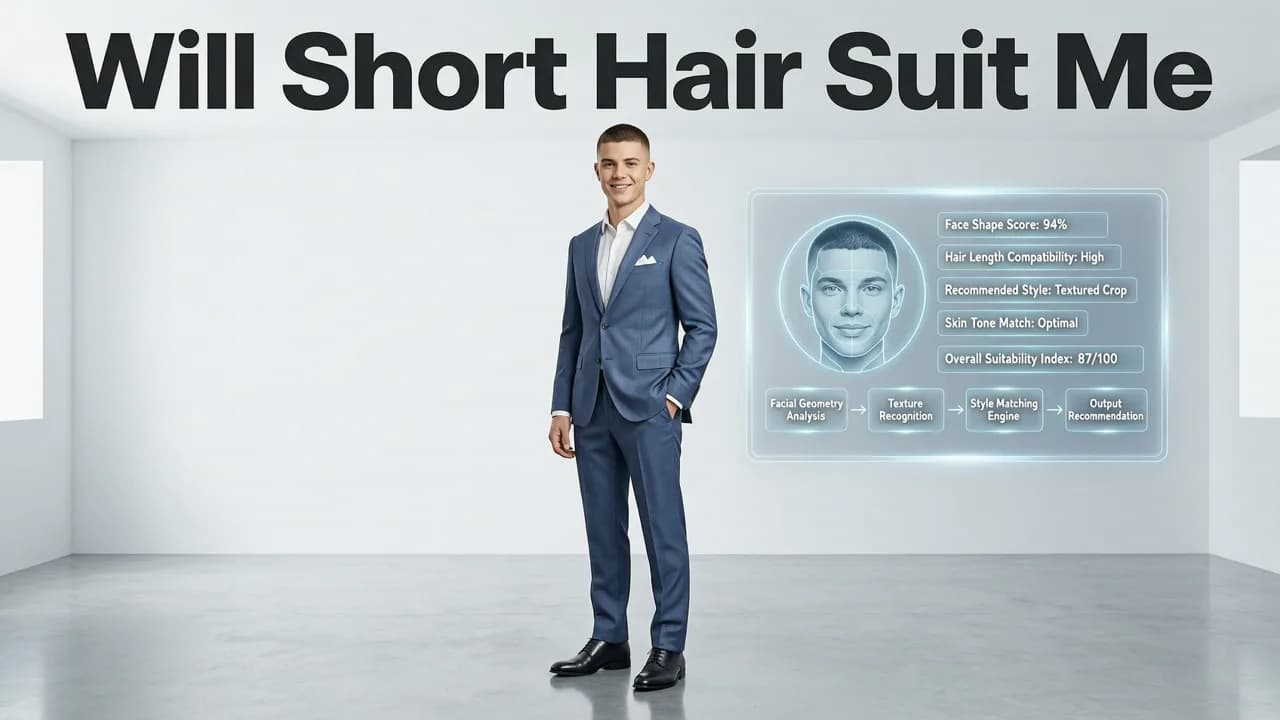
Understanding the mechanics behind the technology helps clarify why these digital previews are so remarkably accurate today. The process relies on a combination of computer vision, geometric mapping, and generative rendering.
1. Facial Landmark Detection
The foundation of any accurate hairstyle simulation is facial landmark detection. The AI identifies dozens of anchor points on your face, including the outer corners of your eyes, the tip of your nose, the edges of your lips, and the precise contour of your jawline. By measuring the distances and angles between these points, the system calculates your exact facial proportions. When evaluating short hair, the AI pays special attention to the lower third of the face, as this is the area most exposed by a short cut.
2. Face Shape Classification
Once the landmarks are mapped, the algorithm classifies your overall face shape—typically categorizing it as oval, round, square, heart, or diamond. This classification is crucial because different short hairstyles serve different optical purposes. For instance, a style with volume at the crown can elongate a round face, while a blunt, chin-length bob can soften the strong angles of a square jaw. The AI uses this classification to filter and recommend styles that mathematically balance your specific proportions.
3. Hairline and Texture Mapping
A common flaw in older photo-editing tools was the unrealistic placement of hair. Modern AI analyzes your natural hairline, including cowlicks, widow's peaks, and recession patterns, to ensure the simulated style sits naturally on your head. Furthermore, generative models render the hair texture—whether fine, thick, wavy, or coily—so you can see how the physical weight and movement of the hair will behave in reality. Developers building these systems often rely on frameworks outlined in the OpenAI documentation and Google AI guidance to ensure these models process biometric data ethically and without bias.
The Classic Short Hair Rule: Does It Apply to You?
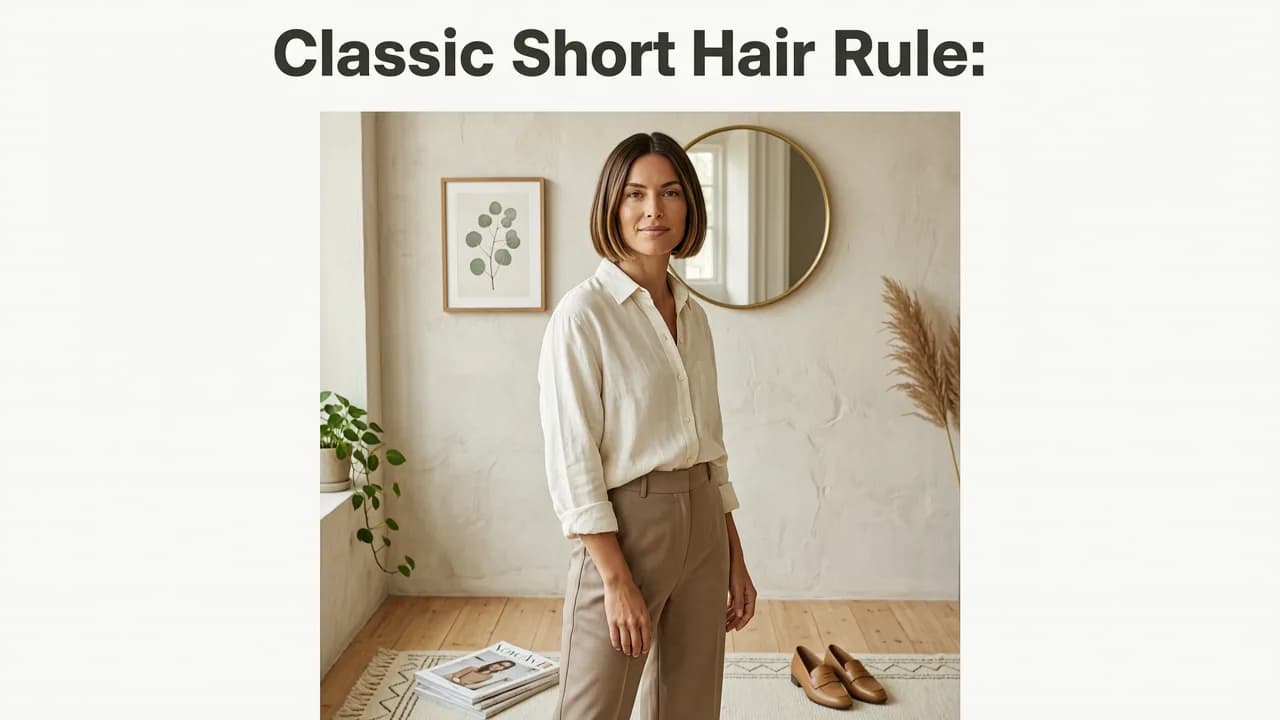
You may have heard of the "2.25-inch rule," a popular metric created by hair stylist John Frieda to determine if short hair will suit a person. The rule states that if the distance from your earlobe to the bottom of your chin (measured vertically with a pencil under your chin and a ruler at your ear) is less than 2.25 inches, short hair will look fantastic. If it is greater, longer hair is supposedly more flattering.
While this rule provides a basic baseline for vertical facial proportions, it is overly simplistic. It ignores horizontal proportions, neck length, shoulder width, and personal style. An AI evaluation is vastly superior because it considers the entire facial canvas. You might have a 2.5-inch jaw measurement but possess high cheekbones and a balanced forehead that make a textured crop look incredibly sharp. Relying solely on a single ruler measurement is an outdated approach in the era of comprehensive digital analysis.
Best Short Hairstyles for Every Face Shape
To help you understand how AI categorizes and recommends styles, here is a breakdown of the most flattering short haircuts based on primary face shapes. You can use this as a reference when browsing digital catalogs.
| Face Shape | Key Characteristics | Recommended Short Styles | Styles to Approach with Caution |
|---|---|---|---|
| Oval | Balanced proportions; slightly longer than wide | Pixie cut, blunt bob, slicked-back crop | Heavy, face-framing layers that hide cheekbones |
| Round | Equal width and length; soft, curved jawline | Asymmetrical bob, textured pixie with high volume | Blunt bobs that end exactly at the chin |
| Square | Strong, wide jawline; broad forehead | Soft layered bob, side-swept fringe, long pixie | Severe, blunt cuts that mirror the jaw's angles |
| Heart | Wide forehead; narrow, pointed chin | Chin-length bob with volume at the jaw, side parts | Ultra-short pixies that expose a wide forehead |
| Diamond | Narrow forehead and jaw; wide cheekbones | French bob, tucked-behind-the-ear pixie | Styles that add width directly at the cheekbones |
How to Use an AI Hairstyle Try-On App for Short Hair
Transitioning from theory to practice requires the right tools. Using a dedicated application allows you to visualize the styles mentioned above on your actual selfie. Here is how to get the most accurate results when testing short hair digitally.
- Prepare your lighting: Stand in front of a natural light source or use even, diffused indoor lighting. Avoid harsh overhead shadows that can distort facial landmark detection.
- Pull your hair back: If you currently have medium or long hair, tie it back tightly or wear a scalp cap. This ensures the AI maps your true hairline and jaw without interference from existing hair volume.
- Upload a straight-on selfie: Look directly into the camera with a neutral expression. This provides the algorithm with a symmetrical baseline for measuring your face shape.
- Test multiple lengths: Do not just try one style. Cycle through pixies, crops, and bobs to see how different lengths interact with your cheekbones and jaw.
For a seamless experience that adapts styles to your unique hairline and facial geometry, the AI Hairstyle Try On for Selfies feature provides a highly realistic preview. If you want to dive deeper into understanding your underlying bone structure before testing cuts, you can also utilize the AI Face Shape Hairstyle Finder to get a comprehensive analysis of your proportions.
Beyond the Cut: Testing Short Hair Colors and Beard Pairings
A short haircut does not exist in a vacuum. The impact of a new length is heavily influenced by color and, for those who grow facial hair, the presence of a beard. Short hair often makes hair color appear more vibrant and concentrated, as the light reflects off a smaller surface area. A shade that looked subtle on long hair might appear strikingly bold when cropped short.
Similarly, removing the visual weight of long hair changes the balance of the lower face. If you are considering a short cut and also maintain facial hair, it is vital to test how the two elements interact. A tight fade paired with a full beard creates a completely different silhouette than a textured crop with a neat goatee. Testing these combinations digitally ensures your overall grooming strategy is cohesive.
To ensure your new short cut is complemented by the perfect shade, you can use the Realistic AI Hair Color Try On to experiment with bold and subtle tones safely. For men looking to balance a short haircut with facial hair, the Realistic AI Beard Try On allows you to preview how different beard densities and shapes will frame your newly shortened hairstyle.
Making the Final Decision
The anxiety of committing to a short haircut is entirely valid, but it no longer needs to dictate your choices. By leveraging advanced facial analysis and realistic rendering, you can eliminate the guesswork and approach the salon chair with absolute certainty. Whether you are aiming for a daring pixie, a sophisticated French bob, or a textured crop, the technology exists to show you exactly how the final result will look.
Ready to discover your ideal short hairstyle? Upload your selfie today and let the AI guide you to a look that perfectly frames your face and elevates your personal style.


